
The Chardham Yatra Tour Package from Aurangabad offers a profound 9-day pilgrimage across the revered sites of Uttarakhand. The journey encompasses sacred destinations including Yamunotri, Gangotri, Kedarnath, and Badrinath, providing an immersive spiritual experience amidst the majestic Himalayan landscape.
The journey commences with an arrival in Dehradun or Haridwar via air, train, or bus. A scenic drive then transports pilgrims to Barkot, a picturesque town serving as a gateway to Yamunotri. The evening is dedicated to relaxation, preparing for the spiritual endeavors ahead.
This day is dedicated to the revered Yamunotri Yatra.
The expedition continues from Barkot towards Uttarkashi, en route visiting the sacred Gangotri.
Following breakfast, the journey proceeds from Uttarkashi to Phata. This day involves travel through scenic routes, leading to Phata, a significant base for the Kedarnath pilgrimage. The evening offers time for rest and acclimatization in Phata.
This day is a highlight, leading to the holy Kedarnath. Pilgrims proceed from Phata to Kedarnath via helicopter, pony, or trekking, as pre-arranged.
After morning prayers and darshan, the descent from Kedarnath begins. Pilgrims return to Phata using their chosen mode of transport, where an overnight stay allows for recovery and reflection on the divine experience.
The pilgrimage progresses from Phata to Badrinath. Upon arrival, a visit to Mana Village is undertaken.
The day is dedicated to exploring Badrinath and its surrounding spiritual landmarks.
The final day involves a scenic drive towards Rishikesh. En route, stops are made at significant confluences (Prayags) including Nand Prayag, Karna Prayag, Rudra Prayag, and Dev Prayag, offering views of the meeting points of various sacred rivers. In the evening, a visit to Rishikesh, the “Yoga Capital of the World,” is scheduled before the final drop-off at Haridwar by 8 PM, marking the conclusion of the Chardham Yatra.
The tour package includes comfortable stays in reputable 3-star hotels across Barkot, Uttarkashi, Phata, Badrinath, and Pipalkoti. These accommodations are selected to provide necessary amenities and a relaxing environment after each day’s spiritual journey. While a camp stay is provided in Kedarnath, other locations feature hotels ensuring comfort and convenience for pilgrims.
The per-person package price for the Chardham Yatra Tour from Aurangabad is as follows:
Breakfast, all sightseeing as per itinerary, AC vehicle Dzire or Innova or Tempo Traveller as per group size, driver allowance, parking, tolls, and stay in 3star AC hotels.
Anything not mentioned in inclusions, entry tickets, boating, guide services, personal expenses, camera fees, or meals other than breakfast.
Child up to 6 years Free
Child 6 to 8 years Half charge
Child above 8 years Full charge
20 percent advance at time of booking
20 percent after getting hotel booking voucher
60 percent during tour in parts
For tours between 15 Dec to 2 Jan, 50 percent advance payment required.
Minimum Rs. 3000 cancellation charge per person
10 percent or Rs. 3000 per person whichever is higher
25 percent cancellation between 46 to 30 days before departure
50 percent cancellation between 30 to 15 days before departure
75 percent cancellation between 15 to 5 days before departure
100 percent cancellation within 5 days of departure or noshow
Cancellation charges are calculated as percentage of total tour cost.
Q1: What is the best time to undertake the Chardham Yatra?
The ideal time for the Chardham Yatra is from May to June and September to October. Monsoon months (July-August) are generally avoided due to heavy rainfall and risk of landslides, while winters experience extreme cold and heavy snowfall, leading to closure of the temples.
Q2: Is a medical check-up required before the Chardham Yatra?
It is highly recommended to consult a doctor and undergo a medical check-up, especially for individuals with pre-existing health conditions, given the high altitudes and varying weather. Pilgrims should ensure they are physically fit for trekking where required.
Q3: What kind of clothing should be carried for the Yatra?
Layered clothing is advised due to unpredictable weather. Warm clothes, including woolens, thermals, gloves, and a cap, are essential, even during summer months. A waterproof jacket and comfortable trekking shoes are also highly recommended.
Q4: Are vegetarian meals available during the tour?
Yes, all meals provided during the Chardham Yatra are strictly vegetarian, aligning with the religious sentiments of the pilgrimage. Most eateries along the route also serve vegetarian food.
Q5: Is it safe for senior citizens to undertake the Chardham Yatra?
With proper planning and medical consultation, senior citizens can undertake the yatra. Facilities like palanquins, ponies, and helicopter services (for Kedarnath) are available, making the journey manageable. It is advised to travel at a comfortable pace.
Q6: What are the primary modes of transport used for the Yatra?
The tour primarily utilizes AC vehicles (Dzire, Innova, Tempo Traveller) for road travel. For Kedarnath, options include helicopter services, ponies, or trekking, depending on the pilgrim’s preference and booking.
Q7: How many days are typically required for the Chardham Yatra?
The Chardham Yatra package from Aurangabad is structured for 9 days, allowing sufficient time for darshans, travel, and rest at each sacred site.
Q8: Are there ATMs available along the Chardham route?
ATMs are available in major towns like Uttarkashi, Badrinath, and Rishikesh, but their availability can be sporadic in remote areas. It is advisable to carry sufficient cash for personal expenses.
Q9: What should be done in case of a medical emergency?
Basic medical facilities and first aid are available in towns along the route. For serious emergencies, pilgrims will be transported to the nearest well-equipped hospital. Carrying personal essential medications is crucial.
Q10: What is the significance of Mana Village?
Mana Village, near Badrinath, is revered as the last Indian village before the Tibetan border. It holds mythological importance as the place where Ved Vyas is believed to have composed the Mahabharata and where the Pandavas passed through on their way to heaven.
Q11: Can one visit any other religious sites during the Chardham Yatra?
The itinerary is structured to cover the main Chardham temples. While there may be optional stops at confluence points (Prayags), any additional detours to other religious sites would require personal arrangements and might not be covered in the package.
Q12: What kind of accommodation can be expected?
The package includes stays in 3-star hotels in most locations and a camp stay in Kedarnath, offering comfortable and hygienic facilities suitable for pilgrims.
Visit our main website for more incredible travel deals: Trypdeals Home
Explore our wide range of tour packages across various destinations: All Tours by Trypdeals
Discover the most sought-after travel destinations with Trypdeals: Top Travel Destinations
The Chardham Yatra is a sacred pilgrimage covering four holy sites in the Himalayas: Yamunotri, Gangotri, Kedarnath, and Badrinath. This 9-day tour package from Aurangabad offers a comprehensive spiritual journey, allowing devotees to seek blessings and immerse themselves in the divine aura of these revered destinations.
Yamunotri, the westernmost shrine of the Chardham Yatra, is the source of the Yamuna River. Dedicated to Goddess Yamuna, the temple holds immense religious significance for Hindus. Pilgrims undertake a trek from Janki Chatti to reach the temple, often taking a holy dip in the thermal springs at Surya Kund before offering prayers. The surrounding peaks and glaciers contribute to the breathtaking natural beauty, making the challenging journey a spiritually rewarding experience. The raw, untamed beauty of the region, combined with its profound sanctity, leaves an indelible mark on every visitor. The rugged terrain and pristine environment truly embody the essence of divine purity.
Gangotri, nestled in the Garhwal Himalayas, is another pivotal site in the Chardham circuit and the origin of the holy River Ganga (Bhagirathi). The Gangotri Temple, dedicated to Goddess Ganga, is a testament to ancient Hindu mythology, believed to be the spot where King Bhagirath performed intense penance to bring the sacred river to Earth. The picturesque landscape, with its towering peaks, gushing river, and serene ambiance, provides a profound spiritual retreat. Devotees often perform rituals and take a purifying dip in the icy waters, seeking spiritual liberation. The temple’s architecture and its natural surroundings evoke a sense of deep reverence and tranquility.
Kedarnath, one of the twelve Jyotirlingas of Lord Shiva, is perhaps the most revered and challenging of the Chardham sites. Located amidst the magnificent Kedar range, the ancient stone temple stands as a symbol of resilience and faith, having withstood centuries of harsh weather and natural calamities. Pilgrims embark on a demanding trek or utilize helicopter and pony services to reach this high-altitude shrine. The backdrop of snow-capped mountains and the powerful spiritual energy emanating from the temple create an unparalleled devotional experience. Its profound historical roots and the sheer grandeur of its setting make it a truly divine destination.
Badrinath, the final and perhaps most accessible of the Chardham shrines, is dedicated to Lord Vishnu. Situated along the Alaknanda River, with the Neelkanth peak as its backdrop, the temple is an architectural marvel characterized by its vibrant facade. The idol of Lord Vishnu, a black stone saligram, is believed to be self-manifested. Near the temple, the Tapt Kund, a natural thermal spring, offers therapeutic waters for pilgrims. Badrinath is not only a spiritual hub but also a place of immense natural beauty, offering panoramic views of the Himalayas and the tranquil flow of the river. Its rich mythology and serene environment draw countless devotees annually.
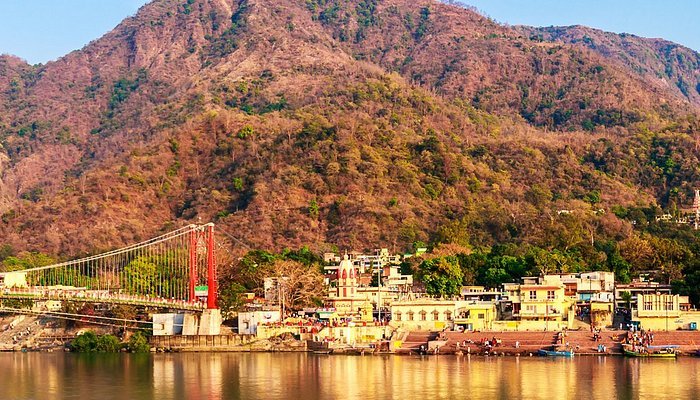
Rishikesh and Haridwar serve as crucial gateways to the Chardham Yatra, each renowned for its unique spiritual significance and natural beauty. Rishikesh, globally acclaimed as the “Yoga Capital of the World,” offers a tranquil setting on the banks of the Ganges, surrounded by hills. It is famous for its ashrams, yoga centers, and iconic bridges like Laxman Jhula and Ram Jhula. Haridwar, meaning “Gateway to God,” is one of the seven holiest places for Hindus, known for the evening Ganga Aarti at Har Ki Pauri, where thousands gather to witness the mesmerizing ritual. Both cities provide a serene spiritual atmosphere, historical temples, and vibrant markets, offering a perfect blend of devotion and cultural immersion before or after the pilgrimage.
