
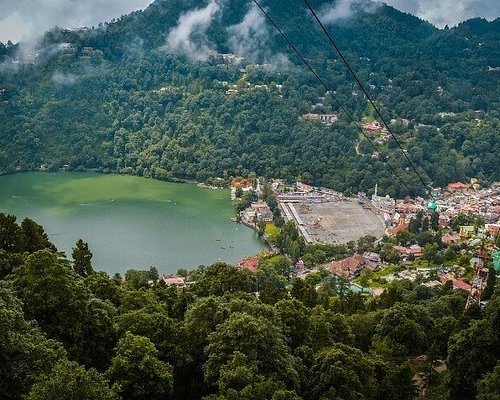
The Chardham Yatra is a sacred pilgrimage encompassing four revered Hindu shrines: Yamunotri, Gangotri, Kedarnath, and Badrinath. This 9-day tour package from Chennai is meticulously designed to provide a spiritual and comfortable journey through the majestic Garhwal Himalayas of Uttarakhand. The ground tour commences from Dehradun or Haridwar, serving as the gateway to these divine destinations.
Day 1: Arrival in Dehradun/Haridwar – Drive to Barkot
The journey begins with an arrival from Chennai to Dehradun or Haridwar via air, train, or bus. Upon arrival, a designated vehicle facilitates the transfer to Barkot. Barkot, nestled in the scenic Uttarkashi district, serves as an important stopover point for pilgrims heading to Yamunotri. The town offers a tranquil environment, providing a peaceful start to the pilgrimage. The evening is spent in Barkot, preparing for the spiritual journey ahead.
Day 2: Yamunotri Darshan – Barkot Night Stay
This day is dedicated to the revered Yamunotri Temple (https://en.wikipedia.org/wiki/Yamunotri_Temple). The temple, dedicated to Goddess Yamuna, is situated at an altitude of approximately 3,293 meters. Pilgrims typically trek or ride ponies from Janki Chatti to reach the temple. The sacred hot springs, notably Surya Kund, where devotees cook rice and potatoes as ‘Prasad’, add to the spiritual significance. The temple’s serene location amidst the Bandarpunch peaks provides a divine backdrop for prayer and reflection. After the darshan and rituals, the return journey to Barkot for an overnight stay.
Day 3: Barkot to Gangotri Sightseeing – Uttarkashi Stay
The morning involves a scenic drive from Barkot towards Uttarkashi, with a significant stop for Gangotri Darshan (https://en.wikipedia.org/wiki/Gangotri). Gangotri is the origin of the holy River Ganga (Bhagirathi). The Gangotri Temple, dedicated to Goddess Ganga, stands majestically on the banks of the river. The legends surrounding King Bhagiratha’s penance to bring Ganga to Earth are deeply ingrained in its history. Visitors are captivated by the pristine river, the surrounding Himalayan peaks, and the spiritual ambiance. After experiencing the divine presence, the journey continues to Uttarkashi for an overnight stay.
Day 4: Uttarkashi to Phata Night Stay
Following breakfast in Uttarkashi, the journey proceeds towards Phata. Uttarkashi, known as the ‘Kashi of the North’, is a significant pilgrimage town with many temples and ashrams. The drive to Phata offers picturesque views of the changing Himalayan landscape, moving towards the higher altitudes that lead to Kedarnath. Phata serves as a crucial base for pilgrims intending to visit Kedarnath, especially for those opting for helicopter services due to its proximity to helipads. An overnight stay in Phata allows for rest and preparation for the rigorous Kedarnath ascent.
Day 5: Phata to Kedarnath (Helicopter/Pony/Trekking) – Kedarnath Camp Stay
This is a pivotal day for Kedarnath Darshan (https://en.wikipedia.org/wiki/Kedarnath_Temple). Pilgrims proceed from Phata to Gaurikund, the starting point for the trek. Depending on prior bookings, guests can avail helicopter services, pony rides, or undertake the challenging trek to the sacred Kedarnath Temple. This ancient temple, dedicated to Lord Shiva, is one of the twelve Jyotirlingas and is situated amidst the breathtaking Kedar Dome. Its spiritual gravitas, combined with the raw beauty of its surroundings, leaves an indelible impression. An overnight stay in a camp or guest house near the temple provides a unique high-altitude experience.
Day 6: Kedarnath to Phata Night Stay
After morning prayers and absorbing the spiritual energy of Kedarnath, the descent begins. Whether by helicopter, pony, or trekking, the return journey to Phata is often filled with reflection on the profound experience. The serene landscapes encountered during the descent offer another perspective of the majestic Himalayas. Reaching Phata, pilgrims check into their accommodation for a well-deserved rest, recuperating from the challenging yet rewarding visit to Kedarnath.
Day 7: Phata to Badrinath – Visit Mana Village – Badrinath Stay
The journey continues from Phata to the revered Badrinath Temple (https://www.tripadvisor.in/Attraction_Review-g1584873-d3493722-Reviews-Badrinath_Temple-Badrinath_Uttarakhand.html). Badrinath, nestled between the Nar and Narayan mountain ranges, is dedicated to Lord Vishnu. The temple’s vibrant architecture and the Tapt Kund, a natural hot spring where pilgrims bathe before darshan, are significant features. Following the darshan, a visit to Mana Village (https://en.wikipedia.org/wiki/Mana,_India), known as the ‘Last Indian Village’ before the Indo-Tibet border, is undertaken. This quaint village is dotted with interesting sites like Vyas Gufa and Ganesh Gufa, steeped in mythological lore. An overnight stay in Badrinath provides an opportunity to explore the spiritual surroundings.
Day 8: Badrinath Sightseeing – Evening Pipalkoti Stay
The morning is reserved for further sightseeing around Badrinath, including the Tapt Kund and potentially exploring the nearby Brahma Kapal, a sacred platform for performing rituals for ancestors. The pristine Alaknanda River flows by, adding to the tranquil ambiance. In the afternoon, the drive towards Pipalkoti begins. Pipalkoti, a small and picturesque town, offers a comfortable stopover on the return journey from Badrinath. It is known for its scenic beauty and serves as an ideal place to rest. The evening is spent in Pipalkoti.
Day 9: Drive to Rishikesh – Enroute Confluences – Evening Rishikesh Visit – Drop Haridwar
On the final day, a scenic drive leads towards Rishikesh. The route is adorned with numerous confluence points of holy rivers, including Nand Prayag, Karna Prayag, Rudra Prayag, and Dev Prayag, each holding immense spiritual significance. These are sacred spots where two or more rivers merge, forming a powerful spectacle. An evening visit to Rishikesh allows for exploration of its famous spiritual spots, such as Ram Jhula and Laxman Jhula, and the Ganga Aarti ceremony. The tour concludes with a drop-off in Haridwar by 8 PM, marking the end of a profound spiritual journey.
Accommodation during the Chardham Yatra is provided in well-regarded 3-star hotels in key locations such as Barkot, Uttarkashi, Phata, Badrinath, and Pipalkoti. These hotels are chosen for their comfort, amenities, and strategic locations, ensuring a restful stay amidst the challenging terrain. Properties often offer clean rooms, attached bathrooms, and basic amenities to cater to pilgrim needs. In Kedarnath, accommodation typically involves camp or basic guest house stays due to the remote high-altitude location, offering a unique part of the pilgrimage experience.
The price for the Chardham Yatra Tour Package from Chennai varies based on the group size, reflecting vehicle and accommodation dynamics. All prices are calculated on a per-person basis.
Breakfast, all sightseeing as per itinerary, AC vehicle Dzire or Innova or Tempo Traveller as per group size, driver allowance, parking, tolls, and stay in 3star AC hotels.
Anything not mentioned in inclusions, entry tickets, boating, guide services, personal expenses, camera fees, or meals other than breakfast.
Child up to 6 years Free
Child 6 to 8 years Half charge
Child above 8 years Full charge
20 percent advance at time of booking
20 percent after getting hotel booking voucher
60 percent during tour in parts
For tours between 15 Dec to 2 Jan, 50 percent advance payment required.
Minimum Rs. 3000 cancellation charge per person
10 percent or Rs. 3000 per person whichever is higher
25 percent cancellation between 46 to 30 days before departure
50 percent cancellation between 30 to 15 days before departure
75 percent cancellation between 15 to 5 days before departure
100 percent cancellation within 5 days of departure or noshow
Cancellation charges are calculated as percentage of total tour cost.
Visit our main website for more incredible travel deals: Trypdeals Home
Explore our wide range of tour packages across various destinations: All Tours by Trypdeals
Discover the most sought-after travel destinations with Trypdeals: Top Travel Destinations
The Chardham Yatra, encompassing Yamunotri, Gangotri, Kedarnath, and Badrinath, is a revered pilgrimage to four sacred sites in the Indian Himalayas. This spiritual journey offers a profound connection to Hindu mythology and breathtaking natural vistas. Often considered the pinnacle of Hindu pilgrimages, it promises spiritual cleansing and the attainment of salvation. Each shrine, dedicated to a specific deity, presents a unique blend of spiritual significance and stunning Himalayan landscapes, drawing millions of devotees annually to its challenging yet incredibly rewarding path. The yatra is not merely a physical journey but a transformative spiritual experience for pilgrims.
Yamunotri, the source of the Yamuna River and the seat of Goddess Yamuna, is the first shrine in the Chardham circuit. Nestled amidst the majestic Garhwal Himalayas in Uttarkashi district, Uttarakhand, it is revered for its pristine natural beauty and spiritual sanctity. The main temple, dedicated to Goddess Yamuna, is typically reached after a trek from Janki Chatti, passing through lush green valleys and gushing waterfalls. The region is also famous for its thermal springs, particularly Surya Kund, where pilgrims cook rice and potatoes as ‘Prasad’. The challenging trek to Yamunotri is considered highly meritorious, offering devotees a profound spiritual connection. The serene atmosphere and panoramic views of the Bandarpunch peaks make it a truly divine experience.
Gangotri, the sacred origin of the River Ganga, stands as another paramount destination in the Chardham pilgrimage. Located in the Uttarkashi district, the Gangotri Temple is dedicated to Goddess Ganga. Legend has it that King Bhagiratha performed severe penance here to bring the celestial river down to Earth. The temple is situated at an elevation of approximately 3,100 meters, offering breathtaking views of the surrounding snow-capped peaks and the Bhagirathi River’s pristine flow. The spiritual ambiance, coupled with the majestic Himalayan backdrop, provides a deeply immersive experience for pilgrims. The ‘Bhagirathi Shila’ near the temple is believed to be the spot where King Bhagiratha worshipped Lord Shiva. Gangotri is a testament to unwavering faith and natural grandeur.
Kedarnath, one of the twelve Jyotirlingas of Lord Shiva, is perhaps the most revered and challenging of the Chardham shrines. Situated at an awe-inspiring altitude of over 3,583 meters in the Rudraprayag district, the ancient stone temple is a testament to architectural resilience and profound spirituality. Surrounded by towering Himalayan peaks, including the formidable Kedarnath peak, the temple’s remote location enhances its mystique and draws devotees seeking Lord Shiva’s blessings. Pilgrims undertake a strenuous trek, pony ride, or helicopter journey to reach this sacred abode. The raw, unspoiled beauty of the landscape combined with the temple’s ancient history creates an intensely spiritual atmosphere. Kedarnath embodies devotion amidst nature’s grandeur.
Badrinath, the abode of Lord Vishnu, is the final and arguably the most accessible of the Chardham destinations. Located in the Chamoli district between the Nar and Narayan mountain ranges, the vibrant Badrinath Temple is an iconic representation of Hindu devotion. The temple’s striking traditional Himalayan architecture, along with the Tapt Kund, a natural hot spring where pilgrims take a purifying dip, contributes to its profound spiritual allure. The Alaknanda River gracefully flows alongside the temple, enhancing the serene ambiance. Nearby attractions include Mana Village, Vyas Gufa, and Ganesh Gufa, all steeped in rich mythological tales. Badrinath offers a powerful blend of spiritual energy, mythological heritage, and breathtaking natural vistas, providing a fitting culmination to the Chardham Yatra.
Rishikesh, often hailed as the ‘Yoga Capital of the World’, is a spiritual town nestled in the foothills of the Himalayas, where the sacred Ganges River emerges from the mountains. This vibrant town in Uttarakhand is renowned for its ashrams, yoga and meditation centers, and numerous temples. Iconic landmarks like the Laxman Jhula and Ram Jhula suspension bridges offer panoramic views of the river and surrounding hills, bustling with pilgrims and tourists alike. Rishikesh is a hub for adventure sports such as white-water rafting and bungee jumping, blending spirituality with thrill. The evening Ganga Aarti ceremony at Parmarth Niketan is a mesmerizing experience, drawing crowds to witness the ritualistic worship of the Ganges. It serves as a gateway to the Garhwal Himalayas and a peaceful retreat for seekers.
Haridwar, meaning ‘Gateway to God’, is one of the seven holiest places for Hindus in India. Situated on the banks of the mighty River Ganges, in the state of Uttarakhand, it is a significant pilgrimage city. The city is famous for its ‘Har ki Pauri’ ghat, where millions of devotees take a holy dip in the Ganges to wash away their sins. The evening Ganga Aarti ceremony at Har ki Pauri is a spectacular event, with lamps floating on the river creating a magical sight. Haridwar is also a vibrant cultural hub, dotted with numerous temples, ashrams, and bustling markets. It serves as a crucial starting and ending point for various spiritual journeys into the Himalayas, including the Chardham Yatra, offering a profound spiritual embrace.
Uttarkashi, literally meaning ‘Kashi of the North’, is a sacred town located in the Indian state of Uttarakhand. Situated on the banks of the Bhagirathi River, it holds immense religious significance for Hindus. The town is home to numerous temples, including the famous Vishwanath Temple, dedicated to Lord Shiva, which mirrors the revered Kashi Vishwanath Temple in Varanasi. Uttarkashi serves as a vital stopover for pilgrims embarking on the Gangotri and Yamunotri components of the Chardham Yatra, providing essential amenities and a serene environment for rest. Surrounded by picturesque Himalayan peaks and dense forests, it offers a tranquil escape and a deeper connection to ancient spiritual traditions. The Nehru Institute of Mountaineering is also located here, adding to its diverse appeal.
