
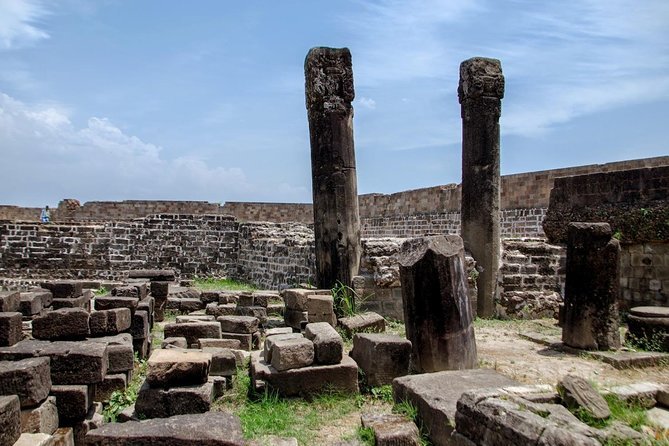
This 5-day itinerary explores the historical marvels of Kangra and the sacred flames of Jawalamukhi, starting and ending at Pathankot Railway Station.
Day 1: Arrival at Pathankot Railway Station. Transportation is provided to the historic Kangra district. The afternoon is dedicated to exploring the massive ramparts of the local heritage sites.
Day 2: Morning departure for a visit to the rock-carved wonders located within the Kangra Valley. The day focuses on the unique monolithic architecture found in the region.
Day 3: Transfer to the holy town of Jawalamukhi. The schedule includes visiting one of the most revered Shakti Peethas in Northern India.
Day 4: A full day dedicated to the local spiritual sites around Jawalamukhi and nearby Kangra shrines.
Day 5: Final morning in the valley for leisure or last-minute temple visits before heading back toward the railway station. Transfer is provided to Pathankot for the onward journey.
Breakfast, all sightseeing as per itinerary, AC vehicle Dzire or Innova or Tempo Traveller as per group size, driver allowance, parking, tolls, and stay in 3star AC hotels.
Anything not mentioned in inclusions, entry tickets, boating, guide services, personal expenses, camera fees, or meals other than breakfast.
Child up to 6 years Free
Child 6 to 8 years Half charge
Child above 8 years Full charge
20 percent advance at time of booking
20 percent after getting hotel booking voucher
60 percent during tour in parts
For tours between 15 Dec to 2 Jan, 50 percent advance payment required.
Minimum Rs. 3000 cancellation charge per person
10 percent or Rs. 3000 per person whichever is higher
25 percent cancellation between 46 to 30 days before departure
50 percent cancellation between 30 to 15 days before departure
75 percent cancellation between 15 to 5 days before departure
100 percent cancellation within 5 days of departure or noshow
Cancellation charges are calculated as percentage of total tour cost.
1. What is the best time to visit Kangra? The months from March to June and September to November offer pleasant weather for sightseeing.
2. Is photography allowed inside Kangra Fort? Yes, photography is generally permitted, though certain areas may have restrictions.
3. How far is Jawalamukhi from Kangra? The distance is approximately 35 kilometers, taking about an hour by car.
4. Are there any dress codes for Jawalamukhi Temple? Modest clothing is recommended while visiting religious shrines.
5. Can one visit Masroor Temples in a single day? Yes, it is a perfect day trip from Kangra or Dharamshala.
6. Is the tour suitable for elderly people? Yes, though the fort requires some walking and climbing stairs.
7. What language is spoken locally? Hindi and Pahari are the primary languages spoken in the region.
8. Are ATMs available in Jawalamukhi? Yes, several ATMs from major banks are located within the town.
9. Is mobile connectivity good in the valley? Most major networks provide stable connectivity in Kangra and Jawalamukhi.
10. Do I need a guide for Kangra Fort? While not mandatory, hiring a guide helps in understanding the historical context.
11. Is food available near the attractions? Numerous local eateries and restaurants are located near the temple and fort areas.
12. What are the timings for Jawalamukhi Temple? The temple usually remains open from 5:00 AM to 10:00 PM.
Visit our main website for more incredible travel deals: Trypdeals Home
Explore our wide range of tour packages across various destinations: All Tours by Trypdeals
Discover the most sought-after travel destinations with Trypdeals: Top Travel Destinations
Kangra is a historic town nestled in the foothills of the Himalayas, serving as the cultural heart of the Kangra Valley. It is renowned for its ancient fort, which stands as a silent witness to centuries of history and numerous royal dynasties. The town is surrounded by lush tea gardens and the towering Dhauladhar mountains, providing a scenic backdrop for travelers. Kangra is also famous for its distinct school of miniature paintings. The blend of historical significance and natural splendor makes it a primary destination for those seeking to explore the heritage of Himachal Pradesh.
Masroor is celebrated for its extraordinary rock-cut temple complex, a rare example of monolithic architecture in the northern part of India. These structures are carved out of a single natural sandstone rock and date back to the 8th century. The intricate details of the carvings depict various mythological scenes and figures, showcasing the artistic brilliance of the era. The site offers a peaceful atmosphere, away from the typical tourist crowds. The presence of a sacred pool in front of the temples enhances the visual appeal, making it a significant site for both history enthusiasts and photographers.
Jawalamukhi is a prominent spiritual destination centered around the sacred temple of Goddess Jwala Ji. The town is defined by its deep religious roots and the unique phenomenon of natural eternal flames. Pilgrims from across the country visit to witness these flames, which are believed to be fueled by natural gas but are worshipped as divine. The town has a vibrant market offering religious artifacts and local crafts. The spiritual energy of the temple, combined with the scenic beauty of the surrounding hills, creates a unique atmosphere that leaves a lasting impression on every visitor.
