
This 6-day itinerary provides a comprehensive exploration of the cultural and historical landmarks in the Kangra Valley, starting from Pathankot.
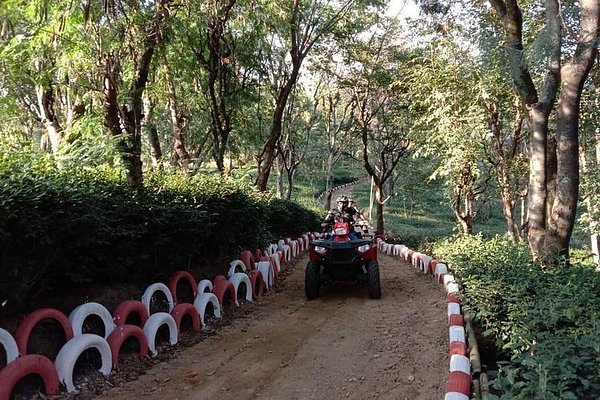
Day 1: The journey commences with a pickup from Pathankot Railway Station. A scenic drive leads to Palampur, where the afternoon is spent exploring the lush tea gardens and the serene surroundings of this hill station.
Day 2: Exploration continues toward Baijnath, known for its ancient spiritual heritage and architectural brilliance.
Day 3: The itinerary moves toward Kangra, the land of ancient forts and sacred shrines.
Day 4: Travelers proceed to Masroor to witness unique monolithic structures.
Day 5: Local exploration of Masroor and nearby scenic spots continues.
Day 6: The final day involves a return journey to Pathankot for departure.
The itinerary covers the verdant tea estates of Palampur and the historical Baijnath temple complex. Highlights include the Bundla Stream, the peaceful environment of the Saurabh Van Vihar, and the spiritual aura of the ancient Shiva temple situated against the backdrop of the Dhauladhar Range.
The focus shifts to the historical Kangra Fort and the unique Masroor rock-cut temples. The journey includes visits to the Brajeshwari Devi temple and the architectural wonders that define the heritage of the Kangra Valley, showcasing the region’s royal and spiritual legacy.
Accommodations are provided in well-appointed 3-star properties such as Hotel RS Sarovar Portico in Palampur and Hotel Grand Raj in Kangra. These hotels feature modern amenities, clean rooms, and panoramic views of the surrounding mountains to ensure a comfortable stay.
Breakfast, all sightseeing as per itinerary, AC vehicle Dzire or Innova or Tempo Traveller as per group size, driver allowance, parking, tolls, and stay in 3star AC hotels.
Anything not mentioned in inclusions, entry tickets, boating, guide services, personal expenses, camera fees, or meals other than breakfast.
Child up to 6 years Free
Child 6 to 8 years Half charge
Child above 8 years Full charge
20 percent advance at time of booking
20 percent after getting hotel booking voucher
60 percent during tour in parts
For tours between 15 Dec to 2 Jan, 50 percent advance payment required.
Minimum Rs. 3000 cancellation charge per person
10 percent or Rs. 3000 per person whichever is higher
25 percent cancellation between 46 to 30 days before departure
50 percent cancellation between 30 to 15 days before departure
75 percent cancellation between 15 to 5 days before departure
100 percent cancellation within 5 days of departure or noshow
Cancellation charges are calculated as percentage of total tour cost.
What is the best time to visit Palampur? The most favorable time is from March to June and September to November.
Is Masroor Temple accessible by road? Yes, the Masroor Rock Cut Temple is easily accessible by car from Kangra.
How far is Palampur from Pathankot? The distance is approximately 115 kilometers and takes about 4 hours.
Is there an entry fee for Kangra Fort? Yes, a nominal entry fee is applicable for all visitors.
Can I find ATMs in Masroor? Facilities are limited; carrying cash from Kangra or Palampur is recommended.
What can I buy in Palampur? Kangra tea and local handicrafts are the most popular items to purchase.
Is photography permitted in Baijnath Temple? It is allowed in the complex but usually restricted inside the inner sanctum.
What clothing is suitable for the tour? Comfortable cottons for the day and light woolens for the evenings are ideal.
Are the Masroor temples safe for seniors? Yes, the site is accessible, though the ground near the rock structures can be uneven.
Is mobile connectivity good in Kangra? Most major cellular networks provide stable signals in the main town areas.
Is breakfast provided in the package? Yes, daily breakfast at the hotels is included in the tour price.
How long does it take to see Kangra Fort? A thorough visit typically takes about 2 to 3 hours.
Visit our main website for more incredible travel deals: Trypdeals Home
Explore our wide range of tour packages across various destinations: All Tours by Trypdeals
Discover the most sought-after travel destinations with Trypdeals: Top Travel Destinations
Palampur is a picturesque hill station in the Kangra Valley, renowned as the Tea Capital of Northwest India. The town is characterized by its aromatic tea gardens, dense pine forests, and the stunning backdrop of the Dhauladhar mountains. Numerous mountain streams flow through the town, contributing to its refreshing climate. The colonial heritage is evident in the local architecture, providing a serene environment for travelers. Palampur serves as a gateway to several trekking trails and offers a peaceful alternative to more crowded hill stations in the region.
Baijnath is a significant spiritual hub located on the banks of the Binwa River. It is home to the ancient Baijnath Temple, a protected monument and a fine example of medieval Nagara architecture. The temple’s intricate stone carvings and historical importance attract both pilgrims and architecture enthusiasts. The town is surrounded by rolling hills and offers a glimpse into the traditional lifestyle of the Kangra Valley. Its proximity to Palampur makes it an essential stop for those exploring the cultural and religious fabric of Himachal Pradesh.
Kangra is a region steeped in ancient history and royal heritage, once serving as the seat of the Katoch dynasty. The town is famous for the Kangra Fort, which stands as a testament to the region’s strategic importance over the centuries. It is also a center for the arts, particularly the famous Kangra school of miniature painting. The presence of the Brajeshwari Devi Temple makes it a vital pilgrimage site. With its blend of archaeological wonders and vibrant local culture, Kangra provides a fascinating look into the historical narrative of the Western Himalayas.
Masroor is celebrated for its remarkable complex of 15 rock-cut temples, which are unique to the Himalayan region. These 8th-century monolithic structures were carved out of a single sandstone rock and feature elaborate depictions of Hindu deities. The site is often compared to the Ellora caves due to its architectural style. A sacred pool in front of the temples reflects the intricate carvings and the distant snow-capped peaks, creating a visually stunning landscape. Masroor remains a hidden gem for travelers interested in archaeology and ancient Indian craftsmanship.
